







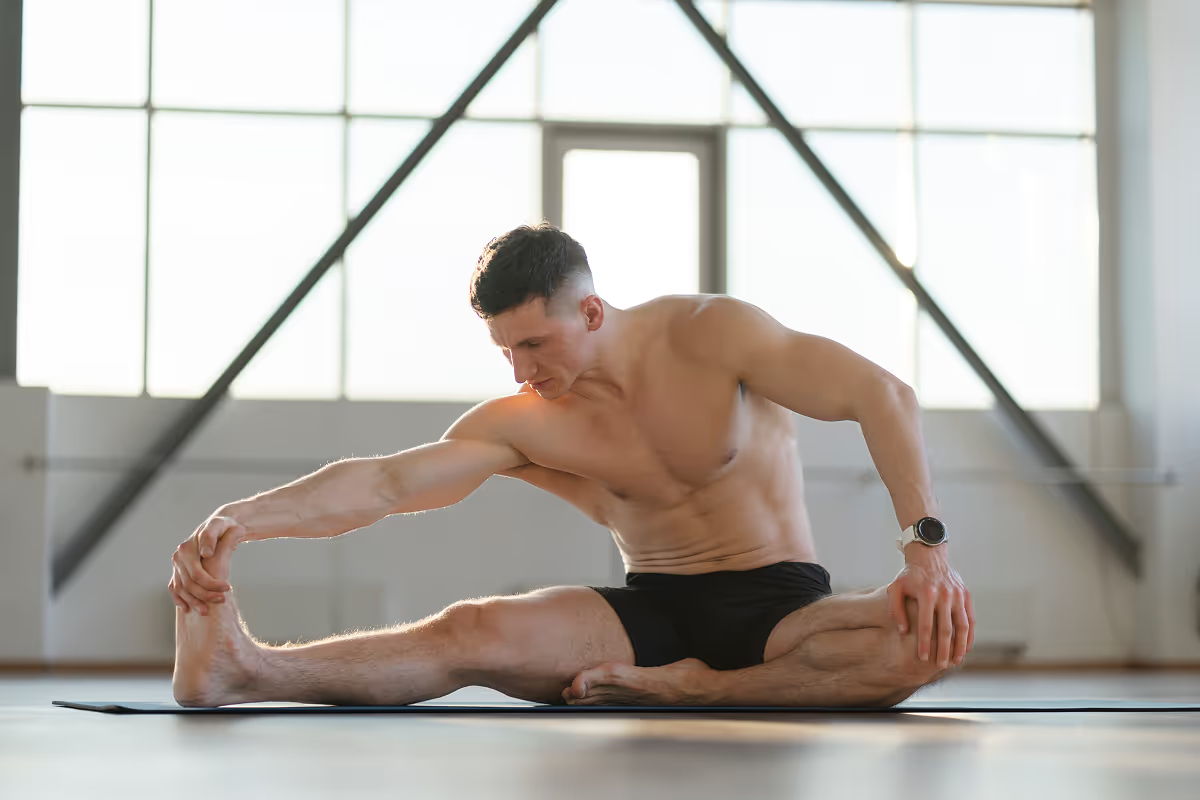
What if the real secret to training hard isn’t more intensity, but smarter intensity?
We’ve all had those days: you finish a brutal session feeling unstoppable, then wake up barely able to move. It’s not weakness — it’s your body asking for balance.
The strongest athletes don’t go easier. They go smarter. They know when to push, when to pull back, and how to make progress that actually lasts.
This isn’t about slowing down; it’s about training with purpose so you can perform harder, recover faster, and keep improving for years.
True longevity and healthspan come from training in a way that keeps your body strong and adaptable for decades.
The Shift: From “Go Hard” to “Go Smart”
We used to think “more sweat equals more results.” Now we know better: progress comes from how you train, not just how hard you go.
Your body’s built to move — lift, sprint, bend, carry — but it also needs rhythm and recovery to keep doing those things well.
Functional, low-impact movement builds strength you can use every day. The kind that makes carrying groceries, hiking hills, or lifting weights all feel like one connected skill.
Train hard, yes — but do it with strategy.
Train smart so you can keep getting better for life.
When you balance effort and recovery, you train your calm as much as your muscles.
Strength That Lasts: Mobility + Stability = Power
Strength without mobility is like horsepower with flat tires.
Mobility gives you range. Stability gives you control.
Together, they amplify your power — helping you lift stronger, move cleaner, and stay pain-free.
Research backs it up: a 2018 Journal of Strength and Conditioning Research study found that programs combining mobility and strength reduced injuries by 25%.
If your squat depth feels off or your shoulders complain during presses, it’s not a weakness. It’s your body’s way of saying, “Help me move better.”
When your mobility supports your strength, your metabolism, hormones, and recovery all work in sync — a natural training rhythm that builds sustainable progress.
Mobility and strength aren’t opposites — they’re partners in performance.
Mobility Is Your Insurance Policy
Mobility isn’t something you add after getting hurt — it’s what keeps you training hard without setbacks.
You don’t need an hour of stretching. Just consistent, intentional movement that keeps joints and tissues ready for performance.
3 Simple Prehab Habits
- 5-Minute Warm-Up
Do the world's greatest stretch, ankle rocks, and shoulder rotations before lifting. - Move Every Hour
Stand, stretch, roll your shoulders. Small resets prevent stiffness. - Active Recovery Days
Walk, swim, or do mobility flows instead of full rest.
Studies show consistent mobility work improves joint health and reduces pain (Frontiers in Physiology, 2021).
Your body performs best when it moves freely and fully.
Building Your Sustainable Training Blueprint
This is how you combine strength, mobility, and low-impact conditioning into a system that lasts.
It keeps your lifts productive, your cardio purposeful, and your recovery intentional — all while letting you go hard and still feel great the next day.
Example Training Flow: Real-World Edition
Move often, lift with purpose, and let recovery build your next PR.
Quick Start Blueprint
Pairing your movement rhythm with your nutrition rhythm — like eating with your clock — can take results even further.
The Longevity Equation: Train Hard, Recover Harder
Training hard is one of the best things you can do for your body. The key is knowing that recovery is what lets you keep doing it.
You can lift heavy, push limits, and still feel ready tomorrow — that’s the art of balance.
Think of your training week as a rhythm, not a grind:
- Hard Days: Build capacity and strength.
- Active Days: Move, breathe, and recharge.
- Rest Days: Recover so you can perform again.
That moment you crush your session, sleep deep, and wake up ready to go again — that’s recovery working. Low-impact movement like walking, cycling, or yoga keeps blood flowing and hormones balanced.
Performance and recovery are the same team.
This is what longevity fitness looks like — not just adding years, but adding life to your training.
Final Thoughts: Master the Balance
Training hard isn’t the problem — it’s part of the reward. The real win is doing it in a way your body can sustain, year after year.
When you combine strength, mobility, and recovery, you don’t have to choose between performance and health. You get both.
So train hard. Recover harder. Move often. That’s how you build strength that lasts a lifetime.
The goal isn’t to slow down — it’s to last longer.
Ready to train hard and stay pain-free?
Let’s build your sustainable strength plan — one that keeps you powerful, mobile, and injury-free for life.